The Chemistry Behind Easily Cleaning Stainless Steel Pans with Baking Soda
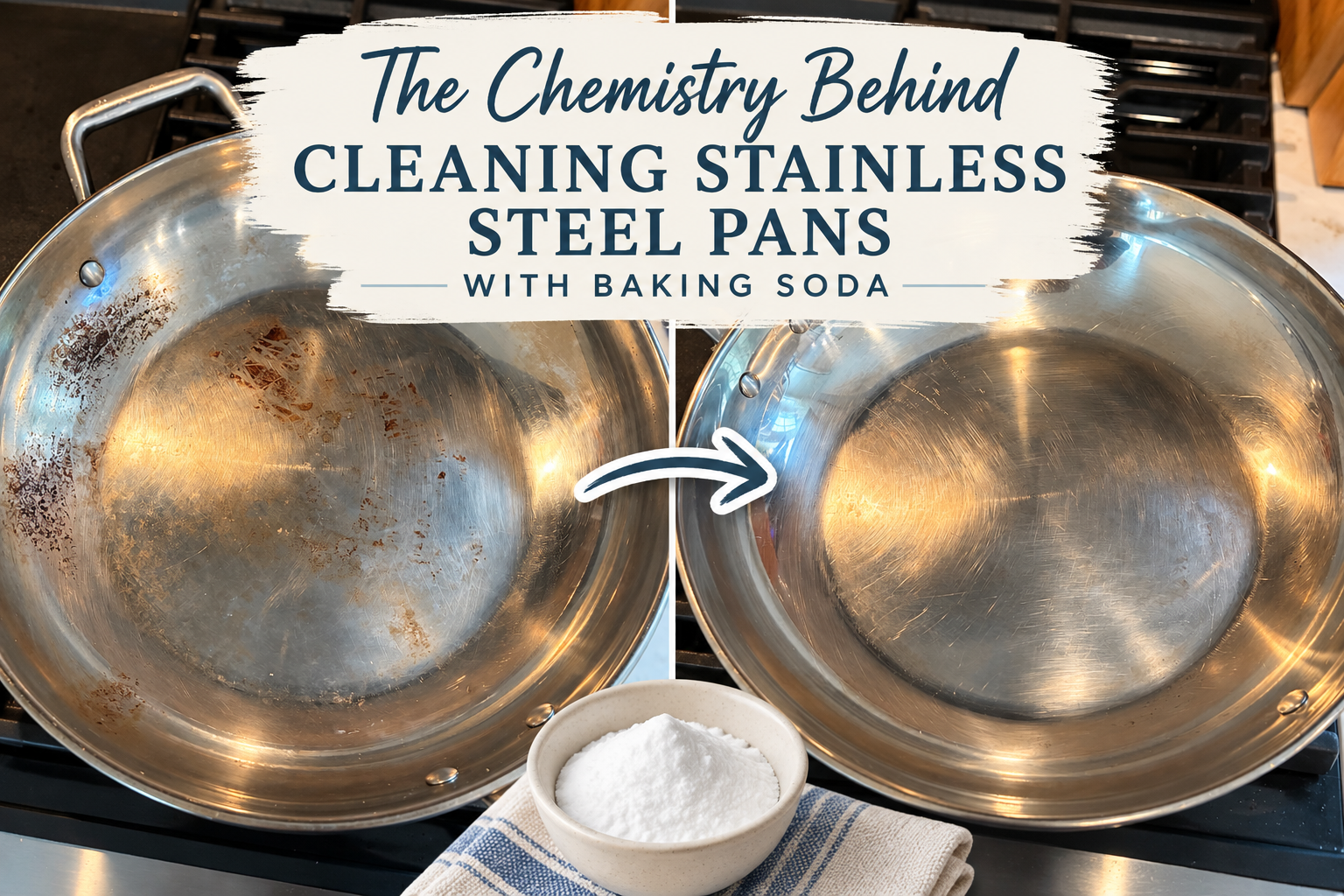
If you’ve ever cooked chicken, burgers, eggs, pasta, or a sauce in a stainless steel pan, you’ve probably encountered the same problem: what looked like a perfectly clean pan when you started now has a stubborn layer of brown, baked-on residue.
Before reaching for a harsh cleaner, try something surprisingly simple: baking soda, water, and a little scrubbing.
The Simple Method We Use
Let the pan cool enough to handle safely.
Add enough baking soda to cover the affected areas.
Add a small amount of water to make a thick paste.
Spread the paste over the cooked-on residue.
Let it sit for about 10 minutes.
Scrub with a brush or non-aggressive scrub pad.
Rinse thoroughly.
Repeat if necessary.
For particularly stubborn areas, adding a little more water and gently heating the pan can provide additional help—but avoid rapidly heating or cooling stainless steel, which can cause warping.
There’s actually some interesting chemistry happening while you clean.
What is that stubborn stuff?
The residue left behind after cooking isn’t just “burnt food.” Depending on what you cooked, it can contain a mixture of:
Fats and oils
Oxidized and polymerized fats
Proteins
Carbohydrates and caramelized sugars
Maillard reaction products from browning
Carbon-containing residue
Some of these compounds can bond strongly to one another and adhere tightly to the stainless steel surface.
The particularly stubborn brown film that develops after repeatedly heating cooking oil is often made up of oxidized and polymerized oil compounds. Heating unsaturated fats in the presence of oxygen can cause them to react and form larger, cross-linked molecules that behave somewhat like a varnish.
That’s why simply washing with dish soap doesn’t always do the trick.
Our Example Pan
We made a big pan of cheesy scrambled eggs.
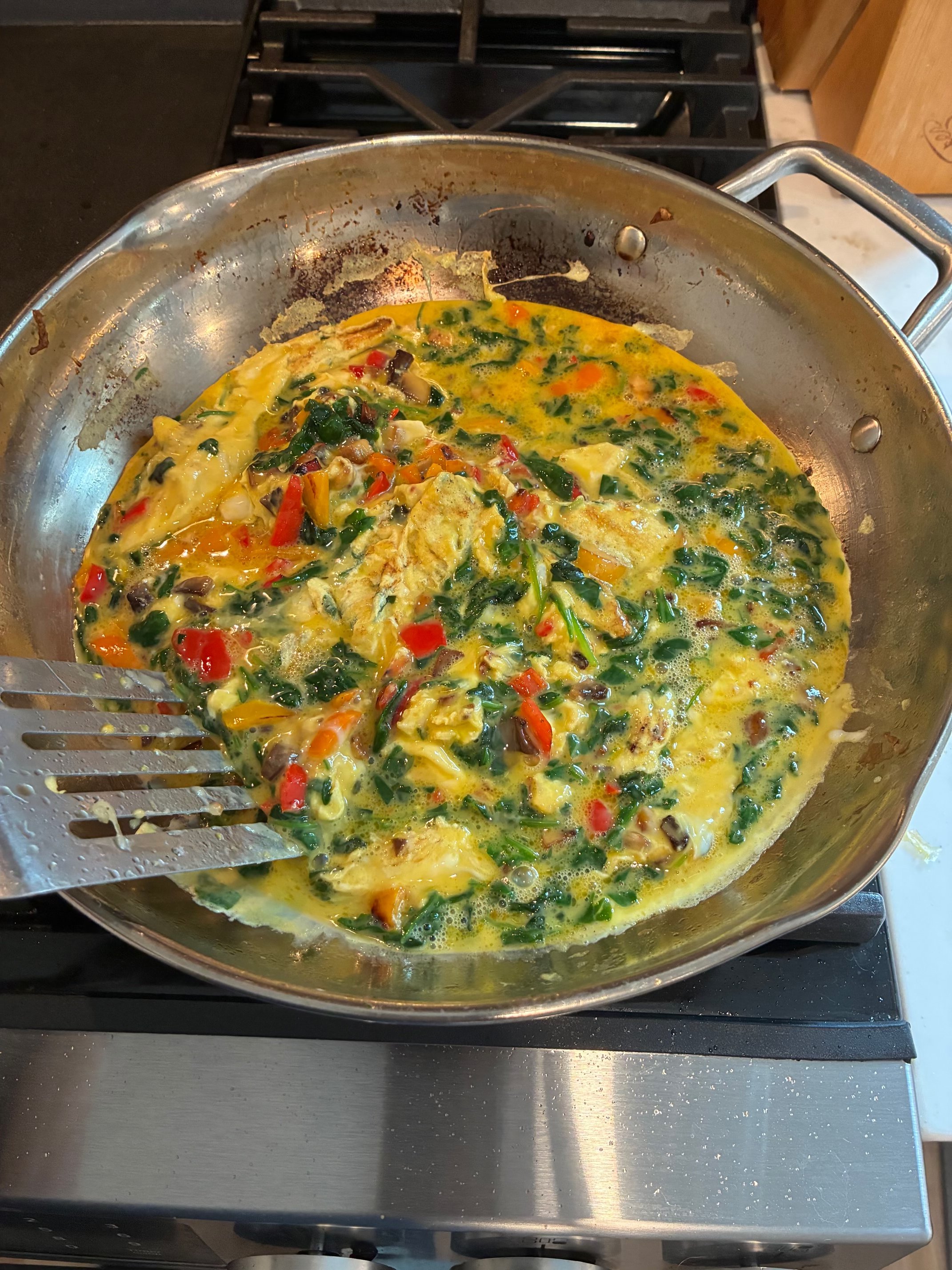
Here’s what was left behind.
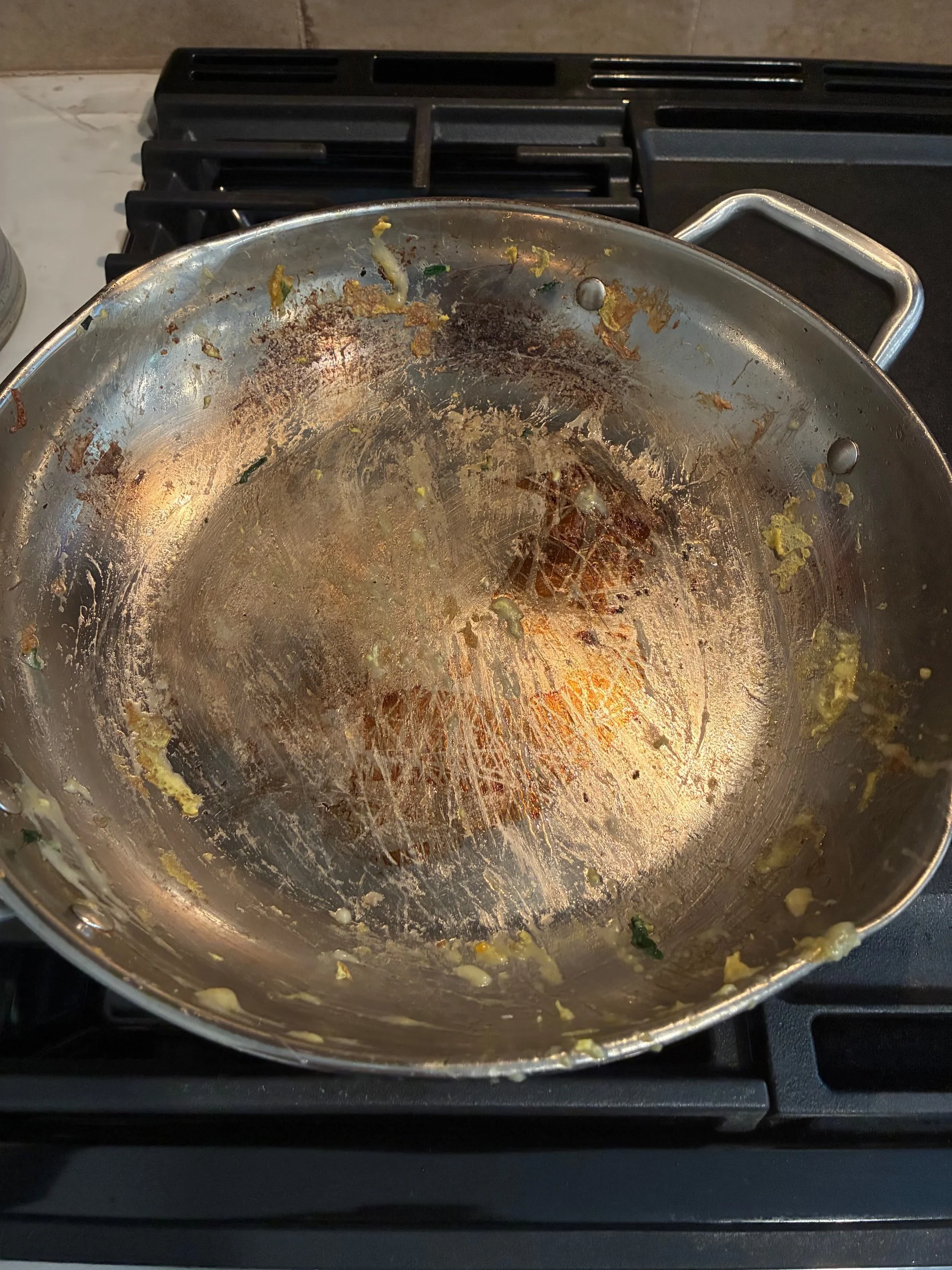
Washing the pan and scrubbing with a sponge took off a lot…but not everything.
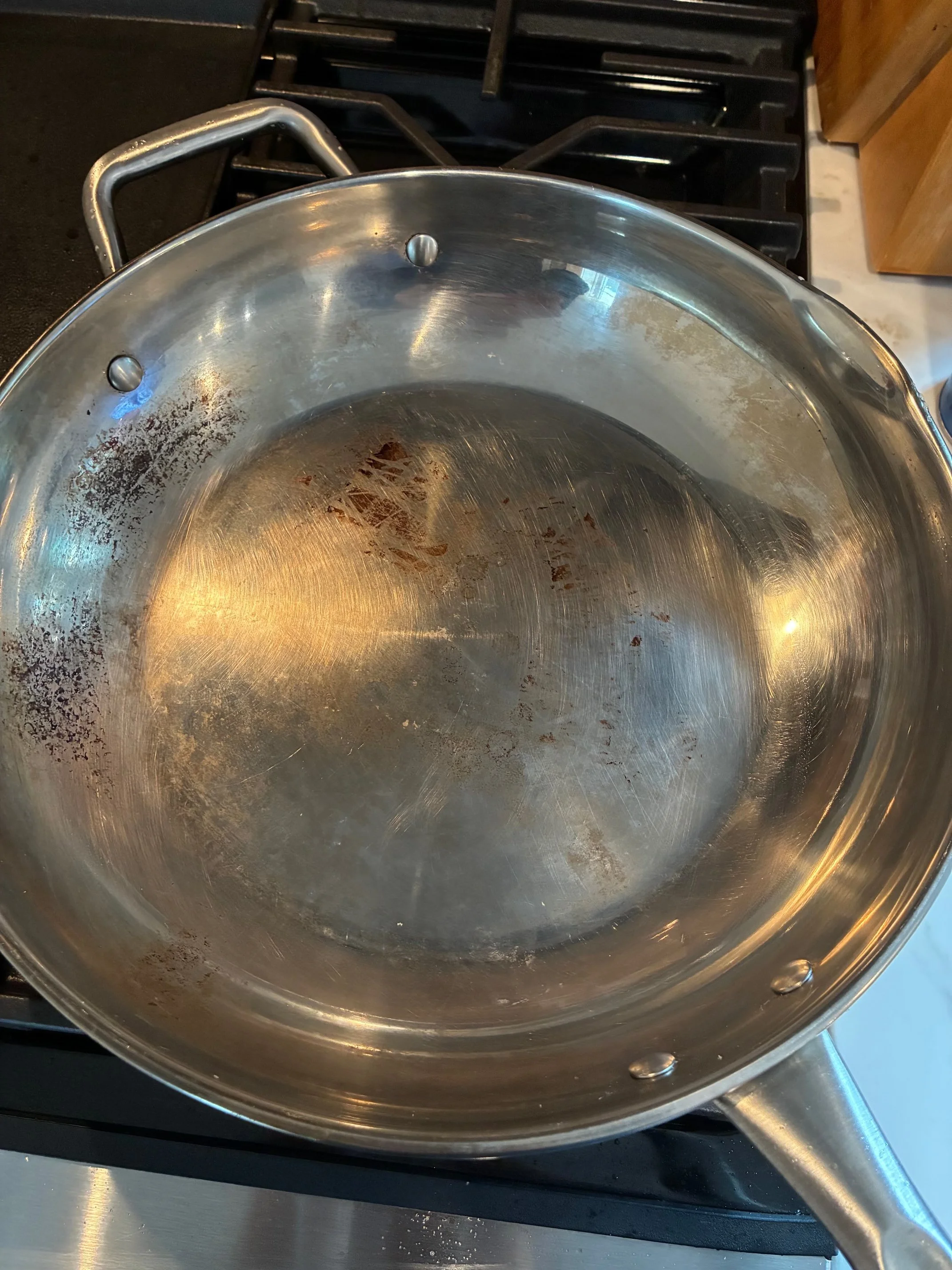
So what does baking soda actually do?
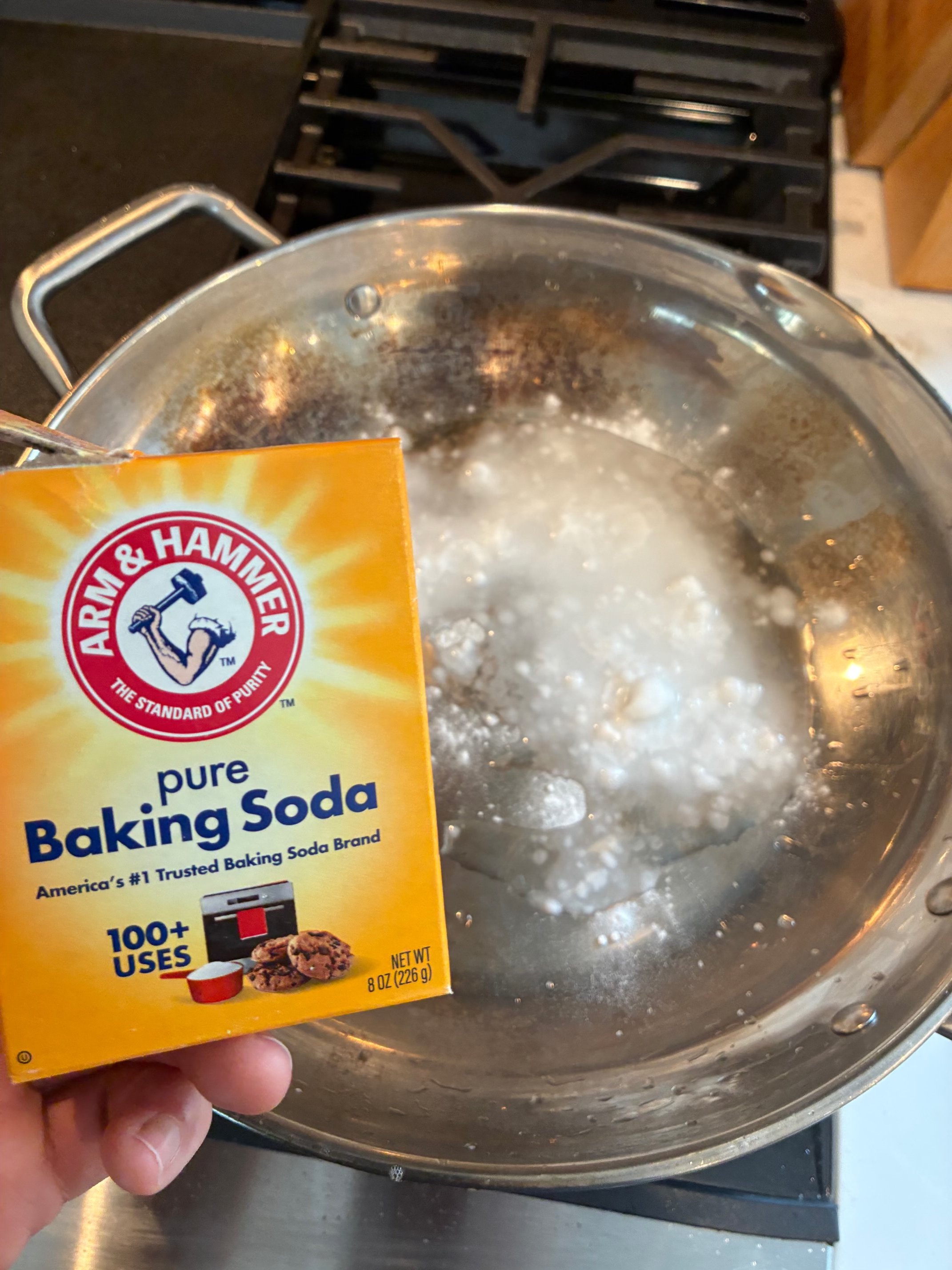
Baking soda is sodium bicarbonate, NaHCO₃.
When you mix it with water, you get a mildly alkaline solution. That alkalinity can help loosen certain types of cooked-on organic residue.
One important piece of chemistry involves carboxylic acid groups.
Oxidation of fats can produce compounds containing the carboxylic acid functional group:

In the presence of bicarbonate, some of these acidic groups can lose their proton:

The result is a negatively charged carboxylate group:

That charge makes the molecule interact much more strongly with water.
In other words, some of the oily residue can be converted from a relatively water-unfriendly form into a more water-compatible form.
Baking soda isn’t strong enough to completely break down a thick layer of polymerized cooking oil, but it can chemically modify some of the more reactive components of the residue and help loosen the overall deposit.
It isn’t just chemistry—it’s also a gentle abrasive
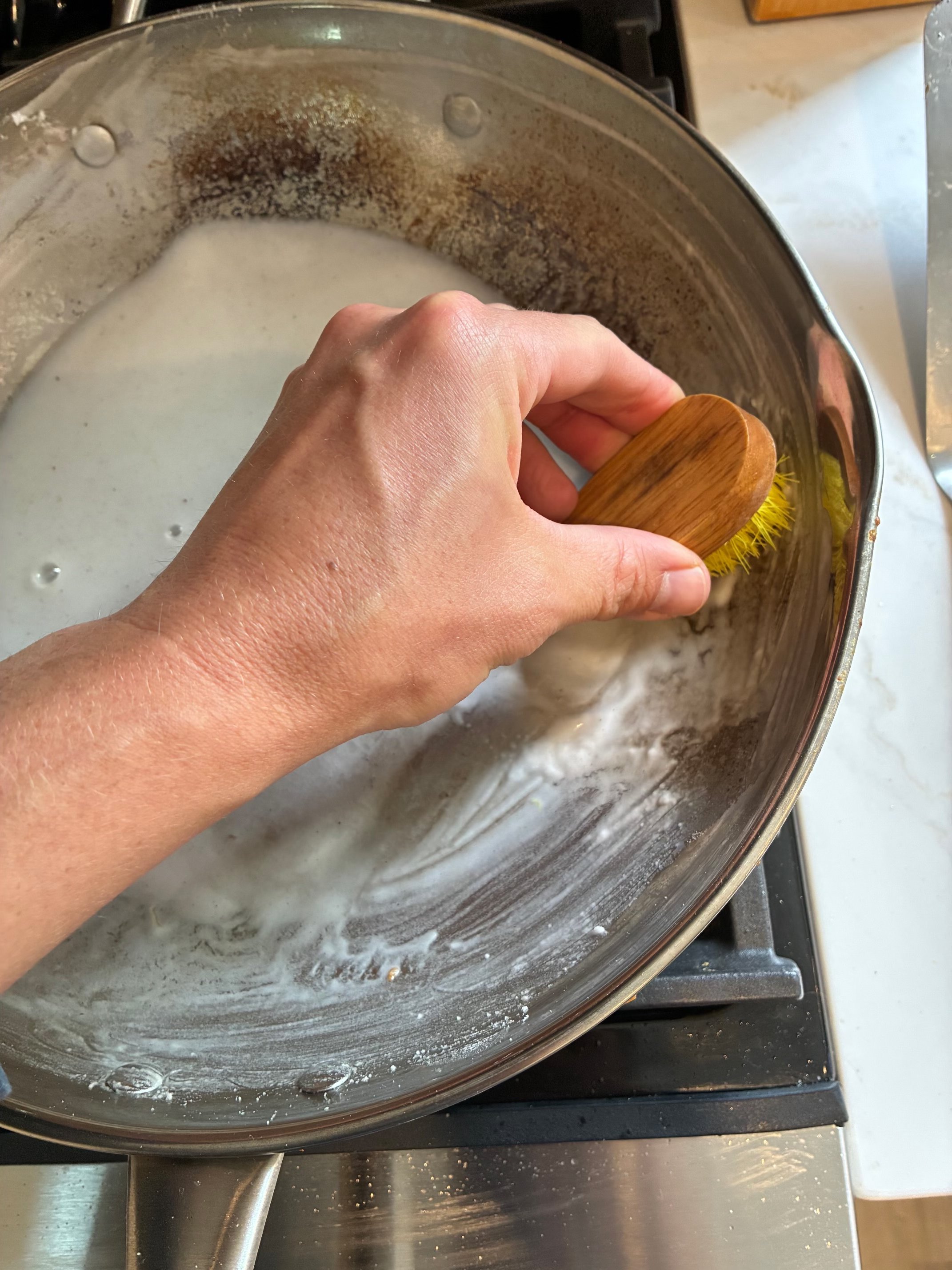
This is an equally important part of why the method works.
When you make baking soda into a paste, the small solid particles provide mild mechanical abrasion.
When you scrub:
baking soda particles + brush → physically disrupt and lift the residue
Baking soda is considerably softer than stainless steel, so it can provide useful scrubbing action without being an especially aggressive abrasive.
That’s why the paste works better than simply sprinkling a little baking soda into the pan and rinsing it away.
Why let the paste sit?
The waiting period gives the chemistry time to work.
A concentrated baking soda paste stays in contact with the residue instead of immediately being diluted and washed away. Water can penetrate the cooked-on material while the mildly alkaline environment interacts with susceptible acidic and oxidized compounds.
During those several minutes, the residue can become easier to mechanically remove.
You’re essentially giving the process time to do this:
chemical loosening → hydration → softening → mechanical removal
rather than asking the brush to do all the work.
What about protein and food residue?
Proteins contain a variety of functional groups, including carboxylic acids.
A simplified protein segment might contain:

Under alkaline conditions, some of these groups can become:

Again, the charged form interacts differently with water and can contribute to swelling and loosening the residue.
This is one reason baking soda can work well after cooking foods containing both protein and fat, such as chicken or ground beef.
What about caramelized or browned food?
Sugar behaves differently.
When heated, sugars undergo dehydration and decomposition and can form hundreds of different compounds. Similarly, the Maillard reaction between sugars and amino compounds produces a complex mixture of brown compounds called melanoidins.
There isn’t one chemical formula for “burnt food.”
Instead, you’re dealing with a complicated mixture of organic molecules.
The mildly alkaline environment from baking soda can help alter and loosen some of these compounds, while the paste and brush provide the physical force needed to remove them.
Why this works so well
The magic isn’t really magic. You’re combining several relatively simple effects:
Baking soda
→ mildly alkaline environment
Alkalinity
→ changes the chemistry of some acidic/oxidized compounds
Water
→ hydrates and penetrates the residue
Time
→ allows those interactions to occur
Baking soda particles + brush
→ provide gentle mechanical abrasion
And that’s what makes baking soda such a useful household cleaner: it’s not relying on one dramatic chemical reaction. It’s using relatively mild chemistry and mechanical action together.
One final chemistry note
You may see people claim that baking soda simply “dissolves grease.” That’s not quite accurate.
Baking soda is a weak base, and it isn’t nearly strong enough to rapidly saponify a thick layer of cooking oil the way a strong base such as sodium hydroxide can.
Instead, baking soda helps loosen, alter, hydrate, and disperse some components of the residue, while the physical scrubbing does much of the actual removal.
So the next time your stainless steel pan looks like it needs to be thrown away, try a little baking soda first.
Sometimes the chemistry is already sitting in your pantry.
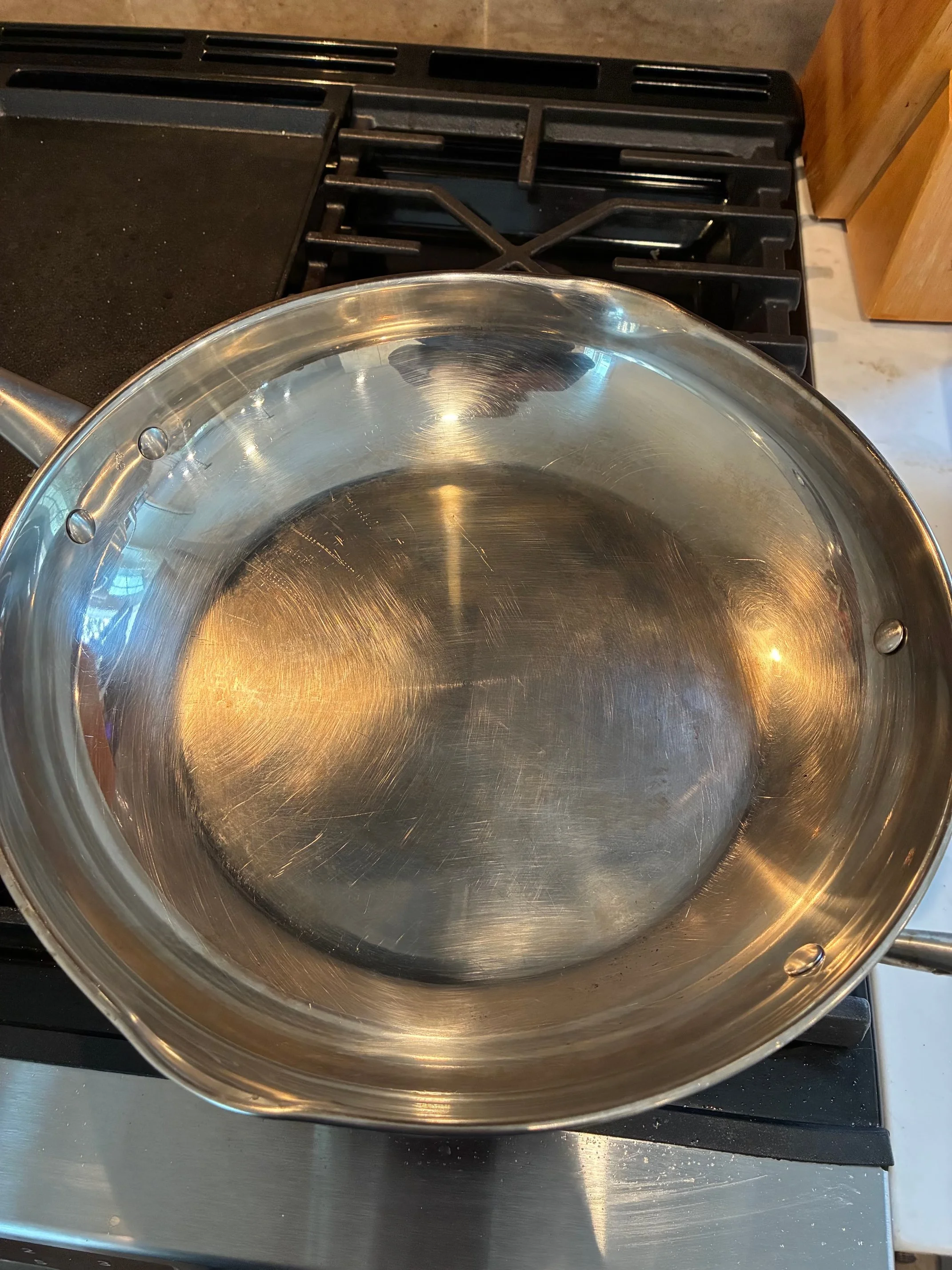
The Pan We Actually Use:
The pan we use we’ve had for 2 years and it is holding up beautifully. The handle end is cool to the touch. I expect this will last us decades. The 5-ply construction combines layers of stainless steel and aluminum to balance heat conduction, heat distribution, heat retention, and durability.
Made In Cookware 10” fry pan:
We actually got a 10 piece set and use the pots and pans as our everyday cooking set:
